
In this new opinion piece, Nathalie Doré, Chief Impact & Innovation Officer shares her insights on the role of insurer in addressing growing social vulnerabilities.

As vulnerabilities increase in a world facing multiple, overlapping crises, insurers are doing far more than simply covering claims. They play a vital role in supporting society as a whole, particularly through prevention and inclusion initiatives. This role will become increasingly important in light of the societal challenges expected over the next decade, especially in the social sphere: ageing populations, the rise of solo living, emerging human and animal diseases, disinformation and more...
Corporate social responsibility at the heart of insurance risk pooling
In recent years, corporate social responsibility (CSR) has focused on two major areas:
- incorporating environmental social and governance (ESG) criteria into corporate decision-making
- Increasing the positive impact of business activities
In insurance, this concept of impact is embedded in our DNA through the principle of risk pooling.
One of the key benefits of risk pooling is accessibility. Without it, the coverage offered by insurance companies would generally be less affordable. By pooling risks, all policyholders share the costs, making insurance coverage more accessible to the most vulnerable members of society.
Prevention: an additional safeguard against social risks
Today, we are frequently warned about the rise in environmental risks and are seeing insurers introduce numerous prevention plans and rightly so. However, it is equally crucial to address social risks, as these are also increasing and can have a lasting impact on individuals and communities. Environmental and social risks are, moreover, often interconnected.
Through their prevention programmes, insurers can play an important role. Take obesity, for example a complex chronic disease that has reached pandemic proportions worldwide. Despite this alarming situation, the World Health Organization maintains that the trend can still be reversed. An analysis of the WHO Acceleration Plan to Stop Obesity shows that prevention measures account for a significant part of the solution.
Such initiatives already exist and have demonstrated their effectiveness, particularly among children, as childhood is when lifestyle habits are formed and when the combined influence of schools and families is especially strong.
Data from trials to which we have contributed show that multi-component school-based interventions combining physical activity, nutrition, health education and parental involvement are particularly effective in preventing excess weight among children in this age group.
Including the most vulnerable by understanding the
different forms of vulnerability
Inclusive involves making insurance products and services designed for people in vulnerable situations accessible thought:
- Affordable pricing
- Specific coverage
- Innovative distribution channels
With the aim of providing them with effective protection.
According to the world health organization, an individual’s’ vulnerability is shaped by physical, social, and environmental factors or process that increase their susceptibility to the impact risks. Three main forms of vulnerability are generally identified
- Health-related
- Social
- Economic vulnerability
For vulnerable populations, access to prevention programmes can provides an additional layer protection. The challenge lies in reaching the most vulnerable.
The insurer’s role is to maximise inclusivity in a complex environment by offering policies that enable people to pursue their life goals. This requires greater access to data, together with its responsible use, in order to avoid excessive personnalisation where this could undermine risk pooling
In the recent years, the insurance industry has made significant progress in developing more inclusive products, particularly in the field of creditor protection insurance. People with aggravated health risks including inflammatory bowel disease, HIV and certain cancers can now obtain coverage that was previously denied or severely restricted.
This progress has been made possible by advances in medicine and across the healthcare
ecosystem as a whole. A better understanding of medical conditions, how they develop and how they are treated enables insurers to refine their risk assessments and expand the scope of insurability.
The AERAS Convention (France) has, of course, played a leading role in extending access to insurance for these groups. But progress does not stop there: several insurers, including BNP Paribas Cardif, are now going beyond the required thresholds, driven by a positive approach designed to serve policyholders’ interests.
In an intermediated distribution model, this goal of inclusion is pursued together with insurance distribution partners. It involves incorporating coverage and services that make protection more effective for end customers while also improving distribution efficiency by limiting refusals and premium surcharges.
Additional mechanisms, such as social action funds, can also provide exceptional support to the most vulnerable populations. If every stakeholder contributes, initiatives that may appear modest at the level of a single company can collectively have a positive impact on society.
Increasing the transparency of insurance offerings
Social inclusion is a central issue because it determines people’s ability to pursue their life goals and contributes to economic and social stability in an uncertain and volatile macroeconomic environment.
Nathalie Doré, Chief Impact & Innovation Officer
Understanding societal challenges and modelling the new risks associated with them enables insurers to ask the right questions: do we currently have the right products to address these risks? If not, how can we adapt them for example, for people experiencing financial vulnerability or facing aggravated health risks?
Maximising insurance’s social impact also requires clear and accessible communication with policyholders. Studies show that there is a strong need for greater education and transparency regarding coverage and policy terms. New online assistants can help people understand insurance products and coverage, provided that they are:
- Free from bias
- Deliver accurate answers
- Handle the data they use appropriately.
Driving progress across the entire market

Continuing to move the market forward requires action across several complementary areas:
- Making insurance offerings easier to understand.
- Strengthening prevention
- Establishing shared industry definitions and standards.
This progress can also be supported by greater market-wide transparency for example, through more systematic reporting of acceptance rates to make improvements visible and encourage increasingly inclusive practices.
By expanding coverage and making protection more effective, the insurance industry will
strengthen its social role over the long term.
READ MORE


The Innovation Ambassadors program, which includes 5 winners among 102 innovative projects submitted from 24 entities worldwide in 2025, shows that innovation can be found everywhere at
BNP Paribas Cardif!
Briefly introduce yourself

I am part of the « Cross-Coordination » Service within «the Efficiency, Technology & Operations » Department in Luxembourg. On a daily basis, we support the management of Cardif Lux Vie in continuously improving the processing of operations by providing expertise, recommendations, and performance management.
We get involved in framing initiatives (pre-projects), change management, tracking performance indicators, and setting up dashboards. We also contribute to risk management and strengthening operational quality.
More specifically, my role in this automation project was to represent our business areas, identify pain points, and then co-design with the teams a completely rethought processing workflow, all the way to validating the key steps of the system.
Present your initiative
The “KYC AML Recertification Automation” project was born from a simple observation:
Our file volumes and regulatory requirements are increasing, while teams are still dedicating a significant portion of their time to repetitive tasks. The challenge was therefore to design a more efficient and scalable process, capable of absorbing this growth while ensuring a high level of quality.
To achieve this, a cross-functional team was formed, bringing together business units, Data, Analytics, IT, and Group stakeholders. On the Data/Analytics side, data scientists developed an AI model to accelerate file processing, fully compliant with the Group’s Analytics governance framework. Close collaboration with all stakeholders including our counterparts at BGL BNP Paribas in Luxembourg enabled us to integrate operational constraints and ensure a deployment perfectly aligned with on-the-ground needs.
How does your initiative correspond to the category won?
Standardizing the process and automating first-level checks that is, the verifications carried out before any in-depth analysis, like checking the validity of ID documents, the consistency of declared information, etc, helps to harmonize practices, limit manual interventions, and significantly reduce processing time.
This development has strengthened our ability to handle high volumes of files, while maintaining a quality level that meets regulatory requirements. Its distinctive feature lies in the combination of technological innovation (the first AI model for Cardif Lux Vie, a life insurance company.
among the major market players in Luxembourg, belonging to the BGL BNP Paribas Group) and risk management.
The AI model is used as a triage tool to guide the analysis towards files requiring an in-depth review, within a defined governance framework (validation rules, traceability).

What are the next steps for your initiative?
As part of our ongoing approach, we have identified two main areas:
- First, we’re going to roll out this solution on a larger scale, extending it to cover more complex types of products, especially for the periodic recertification of our contracts. The goal is to speed up review cycles, ensure compliance, and better handle peaks in activity.
- Next, we want to apply this approach to onboarding new clients. Specifically, this means further automating client acceptance and the processing of new operation requests, making the collection of information, document validation, and consistency checks smoother.
What are your tips for innovating at BNP Paribas Cardif?
You need to dare, test, learn, encourage the sharing of experiences, and above all, hairness the power of collective and intelligence
READ MORE


Our new video series, Inside the Action, shines a spotlight on key initiatives led by BNP Paribas Cardif employees in France and internationally
Since June 2024, BNP Paribas Cardif and BCC Vita have joined forces in Italy through a long-term partnership, combining international insurance expertise with the local cooperative banking network of the ICCREA Group. In this new edition of Inside the Action, Giulia Galbiati, Chief of Staff at BCC Vita, explains how this collaboration is already delivering tangible results while laying the groundwork for future growth.
A Winning Alliance for Italian Insurance This partnership is built on complementary strengths.
- BCC Vita enhances its offering through BNP Paribas Cardif’s international expertise
- BNP Paribas Cardif expands its presence in Italy via a trusted network of local banks, reaching more customers.
It’s a win-win collaboration: we combine local proximity with global innovation for more effective insurance.
Giulia Galbiati, Chief of Staff, BCC Vita
Concrete Results from the First Months Teams have quickly implemented operational improvements :
- Expanded product range to meet diverse customer needs.
- Simplified sales processes for smoother subscriptions.
- Strengthened customer support for an optimized experience.
A Long-Term Vision for Insurance in Italy Designed to last, this partnership evolves alongside BCC Vita’s strategic plan, aiming to :
- Develop innovative solutions tailored to the Italian market.
- Unlock the full potential of this unique collaboration.
- Support BNP Paribas Cardif’s growth in Italy while driving BCC Vita’s transformation.
With BNP Paribas Cardif, we are building a new dynamic for insurance in Italy, benefiting customers and banking partners alike.
Giulia Galbiati, Chief of Staff, BCC Vita
Read more

The 10th edition of VivaTech, Europe’s leading event dedicated to technology and start-ups, took place in Paris from 17-20 June, 2026.
For BNP Paribas Cardif, this new edition was the opportunity to connect with the global innovation ecosystem, with the ambition to explore and engage in discussions around the technologies that will shape the future of insurance and better meet our partners’ and their clients’ needs.
Over the course of these four days, our guests (partners and collaborators) had the opportunity to engage with entrepreneurs, decision-makers and experts on today’s key technological challenges, such as artificial intelligence, cybersecurity, healthcare and digital sovereignty.

What to take away from BNP Paribas Cardif’s presence at Vivatech ? 🚀
BNP Paribas Cardif led two keynote sessions which allowed the insurer to showcase its expertise in artificial intelligence and power to transform insurance and banking services.
An AI at the service of financial advice
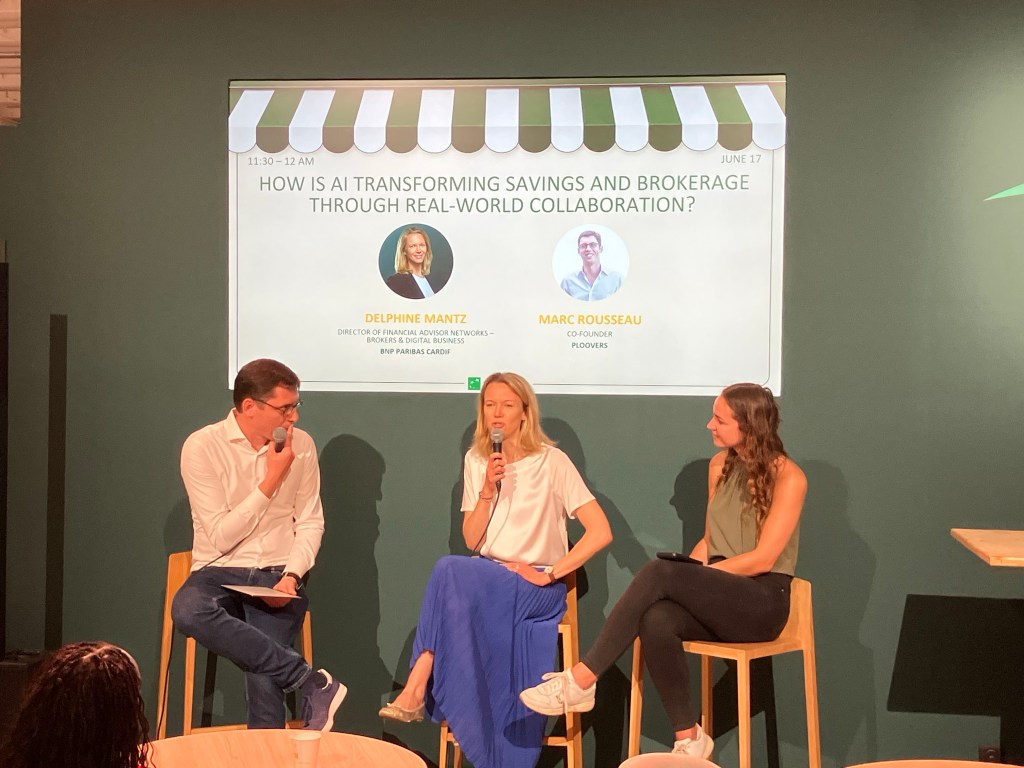
The 17th June : Delphine Mantz Director of Financial Advisors Networks – Brokers at BNP Paribas Cardif France and Marc Rousseau , co-founder of Ploovers shared a common vision: using artificial intelligence to enhance financial advice and makes it personalised, transparent and efficient.
One of the key takeaways from this talk: AI is not replacing humans, it is empowering them. Through automation and data analysis, advisors can save time, reduce errors and focus more on what truly matters: supporting clients and understanding their needs.
This partnership between BNP Paribas Cardif and Ploovers also highlights the importance of balancing:
⚡ the agility and innovation of a startup
🏛️ the robustness and expertise of a leading global insurer
🤝 a shared ambition to create greater value for clients
A fascinating discussion on practical, responsible and human-centered AI.
Concrete use cases throughout the customer journey

The 19th June : Michael de Toldi, Chief AI Officer at BNP Paribas Cardif, and Anthony Belpaire, Head of AI at BNP Paribas Fortis, shared concrete use cases illustrating how AI is creating value across the customer journey from KYC automation to AI-powered customer experiences.
AI is no longer just another technology feature; it is reshaping the way financial institutions operate, serve customers, fit partners needs and adapt to evolving expectations as Agentic AI is fundamentally transforming their communication and consumption patterns.
The innovation challenges of tomorrow’s insurance?
👟 The Cardif Lab’ organized several guided tours for different invited stakeholders (partners, ExCom and top management), each time offering them personalized journeys. Among these visits, one of the highlights was the one organized for collaborators’ teenagers so they could discover innovation in a fun and inspiring way.
This guided tours explored some of the most inspiring innovations shaping the future of tech, AI and customer experience. It was such an inspiring moment to connect with emerging trends already transforming insurance:
👉 generative AI
👉 agentic AI
👉 large-scale automation
👉 new digital uses redefining customer expectations and distribution models
🏆 Our Innovation Ambassadors were honored with an award in recognition of their commitment to promoting innovation at BNP Paribas Cardif, it makes it even more meaningful, as there is no better place to celebrate innovation and the people driving it forward.

Why has AI become a strategic lever for BNP Paribas Cardif?
At BNP Paribas Cardif, we are convinced that artificial intelligence is a major opportunity to accelerate our transformation, strengthen the value we bring to our partners and customers, and simplify the everyday work for our teams.
With nearly 100 AI use cases already in production, we have built strong foundations to scale further. As an insurer, our ambition is clear: to position BNP Paribas Cardif as a leading player in cutting-edge, responsible and secure AI solutions.
This transformation builds on a long-standing commitment to enhancing customer experience through technology while maintaining the highest standards to meet growing expectations.
Because the human dimension is the heart of the insurance profession, AI is seen as a powerful enabler not a replacement.

A successful and meaningful event ✨
VivaTech 2026 was the occasion for BNP Paribas Cardif to:
✅ strengthen its positioning as an actor committed to innovation
✅ develop its relationships with tech ecosystems, start-ups and partners
✅ illustrate concretely how technology can improve the customer experience
✅ inspire employees and younger generations by opening the doors to innovation
Joint mortgages are becoming an increasingly popular route to home ownership in Japan, but they expose couples to a structural gap: traditional mortgage CPI (Creditor Protection Insurance) typically protects only one borrower, leaving the other party’s repayments at risk if life takes an unexpected turn.
Shoichiro Fukushima, Group Leader of Promotion Planning in the Mortgage Loan Business Development Department at, Mortgage Loan business Unit at PayPay Bank, and Yasuko Yokoyama, Chief Manager in Strategic Partnership for BNP Paribas Cardif in Japan, look back on how they joined forces to fill this gap and provided PayPay Bank a highly successful entry into the very competitive Japanese mortgage market.

As a digital bank expanding into mortgages, why did you need to gain a strong foothold in this segment?
Shoichiro Fukushima (PayPay Bank) : PayPay Bank entered the mortgage market as a latecomer, so we knew that simple matching the competition or competing on price would not be enough. We needed a strong, differentiated positioning, and we believed, the most effective way to achieve this was to address the emerging social realities directly. That is why we were keen to work with BNP Paribas Cardif in Japan on the industry’s first(*). Joint Mortgage CPI, bringing a new and meaningful value proposition to mortgage customers.
What were the social issues you identified and how did it translate into a mortgage-related offer?
Shoichiro Fukushima : We observed a steady rise in joint mortgages, driven by increasing property prices and growing number of dual-income households. Yet conventional mortgage CPI typically covers only the insured borrower’s share of loan. If a serious illness such as cancer or others occurs during the repayment period, the other party’s repayments can also become difficult. We felt it was essential to provide protection to people to reduce this shared risk. The idea also came from the front line: our sales teams raised the question, whether such a product could be created, based on what they were hearing from customers.
What is joint mortgage CPI, and what makes it a first in Japan?
Yasuko Yokoyama (BNP Paribas Cardif in Japan) : A joint mortgage is a borrowing arrangement in which two or more people – typically a married couple – each take out a mortgage loan for the same property and act as joint guarantors for each other. In Japan, this structure is commonly known as a “Pair Loan”. With conventional CPI, only the insured person’s portion of loan is covered, leaving the other party’s debt unprotected. Joint mortgage CPI is the first product in Japan designed so that, if one borrower is affected by an unexpected event, the outstanding balance of both borrowers is covered together.
How does the product work in real-life scenarios for couples?
Yasuko Yokoyama :The coverage is designed to respond to a wide range of life-altering situations. If one partner dies, is diagnosed with a prescribed severe disability, or with cancer, the total outstanding balance for both parties can be reduced to zero. If a borrower is hospitalized on a repayment date due to illness or injury, the monthly repayment for both parties is covered. And if hospitalization continues for more than 12 months, the full remaining balance for both parties can also be reduced to zero.
What did each partner bring to make this possible?
Shoichiro Fukushima : We contributed the product concept, based on what we observed in the market and our understanding of the social issues our customers face. We know our customers well and we listen closely to their needs. As a digital bank, we are constantly looking for new ways to identify and address the existing gaps.
Yasuko Yokoyama : BNP Paribas Cardif in Japan with its expertise contributed in rapid co-development and in reducing the administrative burden on CPI through customized operational schemes, including responding to inquiries at call centers on weekends and direct customer response when accepting claims. We also designed a fast underwriting process supported by an automated engine, with strong focus on providing prompt and accurate responses to inquiries and consultations from the partner bank.
What early signals suggest the product is gaining traction, and what comes next?
Shoichiro Fukushima : PayPay Bank was the first in the industry to introduce joint mortgage CPI which quickly helped establish it as a reference point in this area. Since launch, the utilization rate of our joint mortgages increased by 10%, contributing directly to improved profitability. Looking ahead, with property prices continuing to rise and more young customers relying on joint mortgages, we plan to keep co-developing products that meet their evolving needs.
Yasuko Yokoyama : On our side, we are already exploring further co-development opportunities, with a clear focus on making insurance more accessible. We also place greater emphasis on stimulating CPI needs, and to continue delivering new and innovative products and solutions to support PayPay Bank’s mortgage growth.
(*) Based on research by PayPay Bank (as of March 2024)
Read more
The Innovation Ambassadors program, which includes 5 winners among 102 innovative projects submitted from 24 entities worldwide in 2025, shows that innovation can be found everywhere at
BNP Paribas Cardif!
Briefly introduce yourself

My name is Charles Druguet, I am a UX/UI Designer within the Innovation and New Business Models team at Icare. I work on all digital tools, both internal and external, intended for our partners. Icare is my first professional experience; I joined the Indicar team just before incubation at BivwAk!. I was able to design the UX and UI of the demonstrator, with the goal of making the indicators clear and useful for our clients and partners. Outside of work, I am passionate about sports, particularly rugby and boxing; and I enjoy following economic and financial news.
Hello, my name is Stéphane Leguet and I work at Icare, a subsidiary of BNP Paribas Cardif specializing in mechanical breakdown coverage and maintenance contracts for the automotive market, based in Boulogne-Billancourt near Paris in France. When I arrived in 2021, I had the chance to create the Innovation and New Business Models team. With Charles, our mission is to develop digital services that go beyond insurance, to create value for our partners and our clients.

Stéphane
Indicar was born from a simple observation: there is an expertise imbalance between professional sellers and private buyers of used vehicles. Our goal is to democratize access to technical data, such as reliability, parts prices, and risk of damages, to make private purchases safer.
Charles
Today, Indicar comes in several technical solutions for our partners, including a widget and an API. The widget integrates very quickly, in just a few hours. And the API version allows our partners to maintain control over their editorial line. Indicar is also an online demonstrator designed as a sales support tool for Icare’s sales team and our prospects.

How does your initiative correspond to the category won?
Stéphane
From the beginning, we involved the client in our process. We built Indicar in 3 key steps:
- Step 1 : After a 2-week Design Sprint, we presented mock-ups to about ten passersby on the street to validate our ideas.
- Step 2 : We created a mini-site that attracted over 4,000 visitors to test user interest and gather feedback. The conversion rate was very high, allowing us to get an internal GO to continue.
Charles
- Step 3 : We created an MVP developed in agile mode. This incubation stage at Bivwak was very intense. Every two weeks, we organized presentations for internal and external partners to share the progress of the developments, gather their feedback, and integrate their requests into the solution. This allowed us to quickly create concrete use cases, aligned with their needs.
We owe Indicar’s success to cross-functional collaboration between Icare’s Data, Marketing, and Operations teams and to the methodological expertise of the Cardif Lab team.
In summary, Indicar embodies the spirit of innovation driven by the client and the partner.
What are the next steps for your initiative?
Stéphane
After being the first widget integrated on Cardif’s API Store, Indicar’s API is now live with a partner in Portugal and we are in discussions to extend it to other partners and other regions
Charles
On the development side, we continue to refine the tool based on field feedback, to maximize its impact and adoption.
What are your tips for innovating at BNP Paribas Cardif?
Stéphane
My advice?
Find a concrete problem to solve for your clients, your partners, or your colleagues. Start small and quickly to validate your hypotheses where to focus, and find an internal sponsor who believes in your initiative.
Charles
For me, innovation at BNP and Icare goes through the involvement of all professions. It is necessary to share as much information as possible, involve as many people as possible to bring out ideas, and above all, exchange a lot. Feedback from partners and other departments brings perspectives that we do not always have internally. Sharing and collaboration are key!
Read more
The Innovation Ambassadors program, which includes 5 winners among 102 innovative projects submitted from 24 entities worldwide in 2025, shows that innovation can be found everywhere at
BNP Paribas Cardif!
Briefly introduce yourself
Hello, we are Matías González and Jaime Ahumada from Chile, and we are part of the CarBoosting team, a project recognized through the Innovation Ambassadors program at BNP Paribas Cardif.
We are passionate about innovation and collaboration as key drivers to improve customer experience and create real value for the company. Our work sits at the intersection of data, technology, and business, where we focus on solving complex challenges through teamwork and analytical thinking.

Being part of CarBoosting has allowed us to combine structure with creativity, always keeping the customer at the center of our decisions. We strongly believe that innovation happens when diverse perspectives come together around a shared purpose.
Present your initiative
CarBoosting is an AI-driven initiative designed to improve car insurance pricing in Chile, with the aim of making insurance more accessible, fair, and customer-centric.
The project emerged from a business need to identify pricing inefficiencies using data. By combining business knowledge, advanced analytics, and strong cross-functional collaboration, the team developed a model that rebalances premiums more equitably—reducing costs for overpaying customers while adjusting prices for those below the portfolio average.
This collaborative approach enabled a fast transition from concept to implementation.
For BNP Paribas Cardif, CarBoosting delivers a more competitive pricing strategy, stronger risk management, and a scalable solution that can be adapted to other markets and partners.
How does your initiative correspond to the category won?
CarBoosting perfectly reflects the Leading Innovation in AI category. It showcases how AI can be applied not only to optimize performance, but also to promote fairness, transparency, and customer value. What makes this project particularly distinctive is its scalability and adaptability.
The solution is designed to evolve and be deployed in other partners, making it a long term strategic asset. More importantly, it demonstrates how AI can be used responsibly to support both business objectives and customer trust.
What are the next steps for your initiative?
Looking ahead, our next step is to scale CarBoosting to other partners in Chile and explore its use in other markets across the region. At the same time, we are continuing to enhance the model by incorporating new data sources and improving its performance.
From the auto insurance perspective, our ambition is to ensure that the initiative remains relevant, impactful, and future ready.
What are your tips for innovating at BNP Paribas Cardif?
Be open to new ideas and perspectives, and don’t be afraid to experiment.
True innovation happens through collaboration across teams, always keeping the customer at the center.
For more

Our new video series, Inside The Action, shines a spotlight on key initiatives led by BNP Paribas Cardif employees in France and internationally.
We give a voice to those who embody the values of commitment and innovation in their daily work at BNP Paribas Cardif. Each episode delves into the heart of these collective achievements and highlights those who actively contribute to the company’s ongoing transformation.
In this new episode of Inside the Action, Shiketsu Gi, Product Manager at BNP Paribas Cardif in Japan, introduces the rollout of an unprecedented mental health coverage for borrowers in Japan.
According to a Japanese study conducted in 2020, 40% of work absences among young professionals have been linked to psychological disorders, our teams have developed a tailored protection solution to address these emerging societal challenges.
Shiketsu Gi’s testimony highlights BNP Paribas Cardif’s commitment to making insurance more human-centered and accessible to all.
For more

With more than 1,800 integrated retail and banking stores and 9 million personal loans issued each year, the Mexican retailer Coppel serves a broad, often underserved, modest-income customer base across Mexico. Any embedded protection offer must therefore be both trustworthy for customers and robust enough to operate smoothly at very high volumes.
Javier Tagle Hernandez and Felipe Vila (respectively Corporate Director of Business Banking at BanCoppel and Head of Insurance at Coppel), and Olivier Calandreau, CEO, of BNP Paribas Cardif in Mexico explain how they co-developed an embedded creditor protection insurance (CPI) offer shaped by customer expectations of simplicity, transparency and support when something happens. They also share how delivering on that promise required a high-performing operating and technology backbone, validated through a pilot phase before being rolled out at scale.

Q1. What made CPI particularly necessary for your customers?
Javier Tagle Hernandez (Coppel): We are very close to our customers. They visit our stores every week. We serve hard-working families, often with diverse income streams that depend on day-to-day activity. When something unexpected happens, such as an illness, an accident, the loss of the household’s main provider, the impact is immediate. Our customers therefore need loan protection that is easy to understand, and in case of a claim, gives them confidence that they will be guided and supported.
Q2. Why is trust so central to Coppel?
Felipe Vila (Coppel): Coppel has built trust over decades. Customers rely on us because they know that if we offer a product, we will support them and not leave them on their own. Insurance is no different: they expect the same Coppel experience at every touchpoint, and they expect the promise to be fulfilled when it matters most.
Q3. How did you work together to design this offer?
Felipe Vila: We started with a genuine listening exercise including customer focus groups, benchmarking and in-depth customer analysis- BNP Paribas Cardif went on that journey with us. We then built the offer around customer needs. But the product is only the starting point: the real challenge is to deliver on the promise across the entire journey, including questions, complaints and claims, in a way that fits how customers actually interact with Coppel.
Olivier Calandreau (BNP Paribas Cardif in Mexico): Everything started with the customer and the loan. With modest and often irregular income – including many self-employed people – eligibility and coverage must avoid leaving parts of the customer base uncovered. That’s why we also designed benefits beyond covering the outstanding balance, because in this segment there is often no safety net if income suddenly stops.
Q4. What did co-creation mean in practice?
Olivier Calandreau: Co-creation only works if it responds to both customer and partner needs. Coppel’s “Mejora tu vida” (improve your life) motto reflects a broader ambition around financial inclusion that resonates closely with BNP Paribas Cardif’s mission. We believe protection can make that promise more tangible by preserving stability and peace of mind for families when life shocks occur.
Javier Tagle Hernandez: For us, co-creation starts with the partner. BNP Paribas Cardif has been working with us for a long time – they visit our stores, and they understand our customers. This was not an off-the-shelf offer. They went deeper to build something our customers can afford, with simplicity embedded throughout the process.
Q5. Where did you “go the extra mile” in the offer design?
Felipe Vila: Many CPI products are primarily designed to protect the lender. In this case, we designed a proposition that also delivers direct value to the customers, with life benefit paid to the families and coverage designed to help them “land on their feet” when hardship occurs.
Olivier Calandreau: We included income-disruption scenarios, with partial payments in cases of unemployment or temporary disability to secure the loan while also supporting the family. We also added complementary services during unemployment, such as discounts and mental health assistance, recognizing how challenging that period can be.
Q6. What did you have to build technically to make it work at Coppel’s scale?
Olivier Calandreau: BNP Paribas Cardif is upgrading its core IT capacities through a new digital program and Mexico is one the pioneers in the LATAM region. With 9 million new personal loans issued each year, we needed a platform that is robust, fast, and secure, with tight system integration. API-based connectivity allows us to monitor activity daily, down to store level, and significantly improves risk monitoring.
Felipe Vila: The “magic” happens behind the scenes. Claims and services require deep data integration between Coppel and BNP Paribas Cardif. The way our system connects enables a better customer experience when it matters the most, with faster response times and smoother support.
Q7. What are the first signals from the pilot?
Felipe Vila: The pilot helped validate customer experience and identify process adjustments, as integration at this scale is complex. We are now preparing to expand the solution to more stores to continue testing the post-sales and, as claims volumes grow, to assess the claims journey more extensively. Early indicators are encouraging: there have been no complaints so far, and adoption by advisors – our first internal users – has been strong once they understood the proposition and how it supports their daily conversations with customers.
Q8. What comes next for the partnership?
Olivier Calandreau: This is only the beginning. The platform is modular, designed to accelerate the development of more products faster, with a strong focus on security and the protection of customer data as cyber risks continue to grow. We also plan to progressively extend coverage, moving from the initial retail scope to a broader perimeter, while continuing to enhance the customer journey.
Javier Tagle Hernandez: We expect the collaboration to further deepen. The BNP Paribas Cardif team is helping us better understand our clients and the most effective way to give them access to protection that truly fits their needs.
Felipe Vila: We have been partners for several years. But we are no longer just selling a product. We are building an experience around the customer journey – and that is how you build trust in insurance and long-term loyalty to the brand.
The Innovation Ambassadors program, which includes 5 winners among 102 innovative projects submitted from 24 entities worldwide in 2025, shows that innovation can be found everywhere at
BNP Paribas Cardif!
Briefly introduce yourself

My name is Sigrid Motillon and I’m a research officer in charge of assessing medical and special risks within the Actuarial Department of BNP Paribas Cardif in France.
I work on all matters related to medical risk, during both the subscription phase and the claims phase, for loan insurance and personal protection policies.
My role is to analyse medical data and regularly re-assess our acceptance policies to ensure that they reflect medical advances and clinical realities in the field. This can take the form of eliminating medical formalities, simplifying eligibility rules or integrating new, innovative services for our policyholders, such as the reimbursement of genomic tests in certain cases.
I work closely with many internal stakeholders, including the Actuarial team, the Impact and Innovation Department, the operational teams (Subscription, Claims), the team of medical consultants, legal affairs, marketing, communications, etc. And with external medical experts, such as Professor Caroline Charlier-Woerther, whose clinical expertise provides an essential contribution to our analyses.
Driven by the conviction that insurance should support people’s lives without creating unjustified obstacles, I am committed every day to helping our practices evolve towards greater inclusion, simplicity and protection. Outside work, I’m particularly interested in medical advances and healthcare innovations, passions that feed directly into my job.

Other contributors to the project:
- Actuarial Department: David Antonnetti / Myriam Jlidi / Mathieu Jourdain / Sigrid Motillon
- Impact and Innovation Department: Céline Scazzola
- Medical expert: Professor Caroline Charlier-Woerther
Could you please introduce your initiative?
HIV currently affects approximately 200,000 people in France. Thanks to modern antiretroviral treatments, 93% of those who receive them achieve an undetectable viral load, are no longer contagious and can lead a completely normal life. However, despite these major medical advances, access to credit and loan insurance remains a challenge for many people living with HIV.
Our initiative was born out of this realisation, that the way in which risk was assessed for these customers needed to be thoroughly re-examined. The objective was clear: to incorporate the latest medical data to make insurance more accessible, fairer and better adapted to today’s reality.
The project brought together a multi-disciplinary team, including actuaries, medical experts, the impact team, and, most importantly, Professor Caroline Charlier-Woerther, whose expertise provided us with a real-time clinical understanding of treatments and their efficacy.
As a result of this work, people living with HIV who have an undetectable viral load at the time of subscription can now take out loan insurance with no additional premiums or exclusions, up to a maximum of 1 million euros.
This advance goes beyond the criteria of the AERAS agreement for people with increased health risks: we are simplifying the risk assessment rule by retaining a single criterion, namely the undetectable viral load, whereas previously several conditions had to be met.
This initiative is a major development in our accessibility policy, perfectly aligned with BNP Paribas Cardif’s commitment, adopted over 15 years ago, to offer more inclusive, simpler and more comprehensive insurance.
Innovative features:
In line with the advances already made in other pathologies, BNP Paribas Cardif has drawn on the recognised expertise of Professor Caroline Charlier-Woerther to develop an innovative risk assessment.
Innovation n°1: Benefit from the real-time expertise of a specialist in the pathology.
Input from Professor Caroline Charlier-Woerther enabled us to incorporate real-time clinical environment data, and in particular the effectiveness of new treatments resulting from recent advances in medicine.
This information is invaluable and complements the statistical studies carried out over several years.
Innovation n°2: Simplify the risk assessment rule
However, risk assessment must take several parameters into account, as set out in the AERAS agreement (which defines rights to insurance and borrowing for persons with an increased health risk). These include the following:
- An undetectable viral load one year after the start of treatment;
- A CD4 count* ≥ 500/mm3 and an undetectable viral load in the last 12 months prior to subscription;
- A period of maximum 35 years between the start of treatment and the end of the loan insurance contract;
- A maximum loan coverage period of 25 years.
BNP Paribas Cardif has simplified its eligibility criteria. People living with HIV can now borrow for their projects and gain wider access to loan insurance without any additional premiums or exclusions. The only requirement is an undetectable viral load at the time of subscription for loans of up to 1 million euros.
*T4 (or CD4) cells are the cells targeted by HIV. Normally, their number varies between 500 and 1,500/mm3. When this number drops significantly, the patient suffers from immune deficiency. HIV penetrates CD4 cells and disrupts their function. CD4 (or T4) cells | Sida Info Plus
How does your initiative correspond to the category you won: inclusion and accessibility ?
Our initiative fits perfectly into the category that recognises projects promoting inclusion and accessibility. At BNP Paribas Cardif, we are committed to ensuring that everyone has access to the loan insurance best suited to their situation: when someone is rejected for insurance, it often means their financing is also rejected, and they are therefore unable to carry out personal and professional projects.
Thanks to our new approach, 9 out of 10 people living with HIV now have access to loan insurance without additional premiums or exclusions, which represents significant progress. This approach means they are better protected and can take on real estate, professional or personal projects under better conditions.
The long-term objective is to achieve a standard underwriting rate of over 95% for customers with no other comorbidities, compared with less than 5% previously.
By having a direct and measurable impact on the lives of policyholders, simplifying the eligibility criteria and striving to exceed the standards of the AERAS agreement, this initiative perfectly embodies the purpose of the category in which we won, namely to offer more inclusive, fairer and more innovative insurance.
What are the next steps for your initiative?
Launch in a new country or market if relevant / Further development or improvements / Partnerships.
This development is part of a wider initiative initiated by BNP Paribas Cardif over 15 years ago to improve access to loan insurance for vulnerable people.
The next step will be to extend this approach to other pathologies that are currently subject to complex or penalising eligibility criteria, in particular certain rare diseases, once again by relying on partnerships with recognised medical experts and researchers.
We are also looking into possibly extending the system to other countries. For example, we have just rolled out this new pricing system in Belgium.
Our ambition remains the same: to continue simplifying our insurance and making it more inclusive, to enable a growing number of people to realise their personal or professional projects.
What are your tips for innovating at BNP Paribas Cardif?
Keep up with developments, set no limits, rely on collective expertise, question you practices and constantly keep up to date with medical developments, customers’ expectations and ideas from the field.
It is by combining these different factors that we can create the most inclusive and appropriate solutions for our customers.