
Wealth Management: a dynamic market shaped by innovation and personalized advice
- 72% of financial advisors now use artificial intelligence (AI) in their business, compared with 56% last year.
- 54% of financial advisors have observed increased diversification in their clients’ investments over the past 12 months, ahead of the search for security (38%).
- 71% have seen their client base grow by targeting professionals, business owners and heirs.
- According to financial advisors, investors will continue to seek returns (69%), an appropriate level of risk (66%) and diversification (49%).
- More than half (53%) plan to offer more individual retirement products over the coming year, while more than one-third intend to expand their protection insurance offering.
- 92% of them are confident about the next 12 months, the highest level ever recorded by the barometer.
“This twentieth edition of the financial advisors survey confirms the confidence of the sector while highlighting its profound transformation. The rise of artificial intelligence, the diversification of investor profiles and the growing complexity of the economic environment are redefining the practice of wealth management. By combining innovation and personalized advice, advisors are gradually reinventing their profession and expanding their client base” said Delphine Mantz, director of financial advisors networks – brokers at BNP Paribas Cardif France.
Paris, 22nd September 2026 – While the majority of financial advisors (92%) report a record level of confidence, the sector is undergoing a profound transformation, marked by the widespread adoption of AI (72%), a growing client base (71%) and increased demand for diversification (54%). The twentieth edition of the financial advisors survey, published by BNP Paribas Cardif and conducted in partnership with world’s leading marketing data Kantar reveals a sector in full transformation, where the combination of technological innovation and human expertise remains the key to success.
Wealth management enters a new era of opportunities
The wealth advisor profession is reinventing itself, driven by three major factors: an increasingly structured regulatory framework, an economic and social environment that fuels the need for advice, and a technological revolution synonymous with greater efficiency for clients. Regulation is a central issue for 61% of financial advisors, who see it as a key factor in ensuring the security and transparency of the sector. Beyond being a constraint, regulation is becoming a driver for improving practices for the benefit of both advisors and clients, demonstrating the profession’s adaptability. At the same time, asset allocation is becoming more complex and adapting portfolios to the economic environment has become a priority. It is cited as a challenge by 37% of them, up 16 percentage points from 2025.
Artificial intelligence establishes itself as an essential tool
The profession’s digital transformation continues to accelerate: 72% of financial advisors now use artificial intelligence, compared with 56% in 2025, to automate administrative tasks, refine portfolio analysis and provide personalized advice to increasingly demanding wealth management clients. One in four believe AI will fundamentally transform their profession, and 67% say it has also changed their clients’ behaviour, with nearly one-third (32%) considering them much better informed. This technological transformation is accompanied by new risks. Indeed, 72% of financial advisors feel more exposed to cyber threats and 75% have strengthened their security measures. Protecting client data and maintaining trust are therefore becoming essential challenges for wealth management professionals, who place the security and confidence of their clients at the heart of their priorities.
An evolving client base with growing demand for comprehensive support
After several years marked by economic and geopolitical changes, financial advisors perceive a reduction in client concerns, although the level of anxiety remains high. Indeed, 54% of them believe their clients are concerned about their investments (compared with nearly 78% in 2025), while 46% report renewed optimism regarding investment opportunities. Demonstrating both the attractiveness of the profession and the continuing need for advice, 71% of financial advisors saw their client base grow in 2026, the highest level recorded since 2018. This dynamic is notably driven by stronger support provided to certain client segments: professionals in private practice (44%), SME owners and executives (43%), closely followed by self-employed workers (33%) and heirs (32%). This expansion of the client base is also supported by intergenerational wealth transfer issues, for which financial advisors play a central role in supporting families, including in the financial education of younger generations. To meet the expectations of these diverse client segments, financial advisors continue to broaden the scope of their advice through an expanding range of products and services. Individual retirement savings solutions are emerging as a key product category, with 53% of financial advisors (versus 32% last year) planning to develop this business further. Individual protection insurance and credit protection insurance are also viewed as essential services by nearly one-third of them to meet clients’ protection needs, particularly those of professional clients facing life’s uncertainties. Finally, 40% of financial advisors plan to strengthen their employee savings plans within their business portfolio over the coming year.
Investment trends driven by diversification
This year, 54% of financial advisors highlighted diversification as a priority for their clients (compared with 41% in 2025), ahead of security, which was cited by 38% of them (versus 63% last year). This trend reflects a complex macroeconomic environment and increasingly volatile financial markets, where the expertise and advisory role of financial advisors are essential. The risk-return balance will naturally remain the key selection criterion for clients: 69% and 66% of financial advisors are convinced of this and expect it to remain a priority over the next 12 months. To meet this demand, they are focusing on financial products that align with new investor expectations or remain underrepresented in portfolios. ETFs continue to gain traction and address the need for diversification, with 46% of financial advisors planning to recommend them more frequently. Defence and sovereignty-related funds remain highly popular and rank second among the investment solutions that advisors intend to promote (43%). Finally, the development of private assets is seen as an opportunity by nearly half of wealth management professionals (49%), although two main barriers are holding back wider client adoption: a lack of liquidity, cited by 65% of financial advisors, and the risk of capital loss, mentioned by 51% of respondents.
Record-high confidence among financial advisors, combined with a realistic view of ongoing and future transformations
Financial advisors take a realistic view of competition while looking ahead with confidence. 92% say they are confident about the next 12 months, compared with 85% in 2025, marking the highest level recorded over the past five years. This optimism helps explain the continuation of market consolidation, with 55% of financial advisors having already completed an acquisition or considering one. Of these, 24% have already completed such an operation and 31% are considering doing so. This trend enables firms to reach greater scale and expand their range of products and services in order to better support their clients, particularly in response to the growing influence of fintechs, which are cited by 57% of professionals as competitors, ahead of traditional players such as banks and other financial advisors, mentioned by 24%.
Looking to the future, 67% of advisors surveyed believe that client relationships will remain essential over the next 20 years. At the same time, 59% anticipate a greater recognition of their expertise, driven by demand for specialized skills to serve increasingly well-informed investors and by stricter regulatory requirements.
Faced with the constant evolution of their sector, financial advisors once again demonstrate their ability to turn challenges into opportunities to enhance the quality of support they provide to clients. Overall, 89% of those surveyed believe that the profession offers significant growth prospects over the next five years.
Buying a used car is a high-stakes moment for customers, often amplified by uncertainty about a vehicle’s condition. In France, Stellantis Financial Services and BNP Paribas Cardif, through their respective subsidiary Stellantis Insurance & Icare, have partnered to support the Spoticar label with a unified suite covering warranties, maintenance and specific electric vehicle protection.
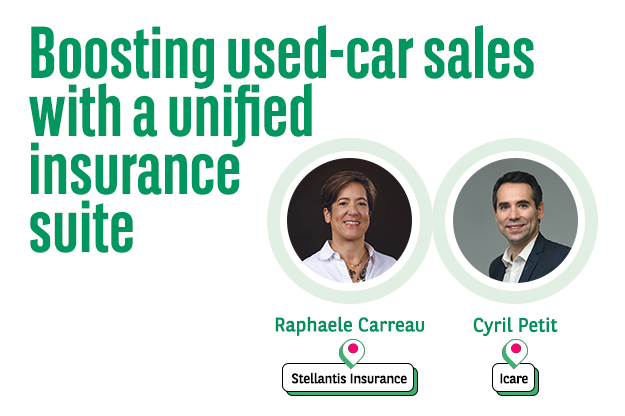
Raphaele Carreau, Global Head of Stellantis Insurance, and Cyril Petit, Global Head of Mobility at BNP Paribas Cardif and CEO of Icare, explain how the partnership was designed to reassure buyers, simplify dealers’ day-to-day operations, and scale performance across the network.
What was the situation before the partnership; what were the key barriers to customer confidence in used cars, and what did dealers need most?
Raphaèle Carreau (Stellantis Insurance): No – the foundation already existed. Stellantis had established used car warranty and extended warranty products. What we needed was a step up in operational efficiency and service quality, supported by tools that are both competitive and effective.
Cyril Petit (Icare): That is a crucial point. This is not “just an insurance product.” It is an end-to-end industrial chain that must be fully integrated into the dealer sales journey and day-to-day operations to deliver real value and be relevant.
You chose a partnership model rather than a classic supplier relationship. What philosophy guided that choice?
Raphaèle Carreau: For me, the partnership model matters because it aligns interests. When all parties share the same performance logic and risk exposure- when everyone has ‘skin in the game’– service quality improves as a direct consequence.
Cyril Petit: It also transforms how people work together. We experience it everyday: we operate as one joint team across the entire value chain, combining the skills of each party to achieve the best possible outcome.
When you say “alignment” and “skin in the game,” what does that mean in practice?
Raphaele Carreau: It means establishing a clear principle from the outset: sharing value fairly pooling expertise with the humility to recognize what each partner does better.
Cyril Petit: It also means sharing outcomes. If we get it wrong, we share the consequences in a balanced way. And if we get it right, we share success in the same way. That is what makes the relationship fundamentally different.
What were you looking for in a partner, and what did each of you bring to the table?
Raphaele Carreau: There is a long-standing history of collaboration between Stellantis and BNP Paribas including between Stellantis Insurance and BNP Paribas Cardif, with Icare having previously partnered with Credipar in France. Concretely, we were looking for proven expertise in mechanical warranty products, with a longer track record than ours, as well as tools and operations already running at much higher volumes. The objective was to achieve operational efficiency, which in turn drives economic efficiency.
Cyril Petit: What makes the set-up powerful is having the entire ecosystem around the table: the dealer, network the manufacturer, the finance “arm” the insurer. This allows us to look at each topic end to end, from product and distribution to financing and insurance, and to close the loop on decisions across the full value chain. We then co-constructed the solution through joint workstreams across product, pricing and operations, selecting what works best based on each party’s strengths.
What changes for dealers in daily operations, very concretely?
Raphaele Carreau: It has been a continuous evolution rather than a revolution, consistently focused on making processes simpler for dealers. The experience is now more seamless and better integrated. We improved interfaces and integration into dealer tools – across sales, after-sales and management – and raised the bar on service quality, in particular regarding responsiveness, processing times and payment timelines.
Cyril Petit: Our goal is for the claims journey to feel smooth and fast across the entire network. When a dealer contacts us, we align on a first diagnosis within minutes, and if the invoice matches what was agreed, payment follows quickly. The ideal outcome is a process that is so fluid that it no longer generates complaints
Why will the electric vehicle (EV) battery cover be important to include very soon?
Raphaèle Carreau: EVs already represent a significant share of new registrations, and for used-EV buyers the battery can be a source of concern. Adding battery cover directly addresses that anxiety and supports Stellantis’ broader transition to electric mobility. From an insurer’s perspective, EVs come with far less historical data than combustion vehicles – and actuarial work depends on robust data. Partnering with Icare, which brings deep technical expertise, and with Stellantis as the manufacturer, enables us to pool the data needed to design a more relevant product.
We are only at the early stages of the EV movement: technology evolves quickly, and the product range will have to adapt quickly too. This partnership allows us to combine data and expertise to continuously refine and enhance the offer over time.
How will you measure success in the first months, and what should it look like by year-end (2026) ?
Raphaèle Carreau: The first and most visible metric to follow is the number of dealers joining the program, as this is a clear sign of trust. We then will track: commercial volumes, warranties, extended warranties, maintenance products. We will also track operational KPIs such as handling time, payment timelines, responsiveness, and the network’s feedback, which should include a substantial decrease – and, ideally, the full disappearance – of negative feedback. Indeed, our network satisfaction surveys should show that the program has been improved and that it makes sense for dealers to join.
Cyril Petit: For us, a key milestone is reaching the full scope we set for ourselves. By the end of 2026, the program should be fully deployed, allowing us to verify -with concrete results – whether we have met, or exceeded the objectives we agreed together.
Read more


In this new opinion piece, Nathalie Doré, Chief Impact & Innovation Officer shares her insights on the role of insurer in addressing growing social vulnerabilities.

As vulnerabilities increase in a world facing multiple, overlapping crises, insurers are doing far more than simply covering claims. They play a vital role in supporting society as a whole, particularly through prevention and inclusion initiatives. This role will become increasingly important in light of the societal challenges expected over the next decade, especially in the social sphere: ageing populations, the rise of solo living, emerging human and animal diseases, disinformation and more...
Corporate social responsibility at the heart of insurance risk pooling
In recent years, corporate social responsibility (CSR) has focused on two major areas:
- incorporating environmental social and governance (ESG) criteria into corporate decision-making
- Increasing the positive impact of business activities
In insurance, this concept of impact is embedded in our DNA through the principle of risk pooling.
One of the key benefits of risk pooling is accessibility. Without it, the coverage offered by insurance companies would generally be less affordable. By pooling risks, all policyholders share the costs, making insurance coverage more accessible to the most vulnerable members of society.
Prevention: an additional safeguard against social risks
Today, we are frequently warned about the rise in environmental risks and are seeing insurers introduce numerous prevention plans and rightly so. However, it is equally crucial to address social risks, as these are also increasing and can have a lasting impact on individuals and communities. Environmental and social risks are, moreover, often interconnected.
Through their prevention programmes, insurers can play an important role. Take obesity, for example a complex chronic disease that has reached pandemic proportions worldwide. Despite this alarming situation, the World Health Organization maintains that the trend can still be reversed. An analysis of the WHO Acceleration Plan to Stop Obesity shows that prevention measures account for a significant part of the solution.
Such initiatives already exist and have demonstrated their effectiveness, particularly among children, as childhood is when lifestyle habits are formed and when the combined influence of schools and families is especially strong.
Data from trials to which we have contributed show that multi-component school-based interventions combining physical activity, nutrition, health education and parental involvement are particularly effective in preventing excess weight among children in this age group.
Including the most vulnerable by understanding the
different forms of vulnerability
Inclusive involves making insurance products and services designed for people in vulnerable situations accessible thought:
- Affordable pricing
- Specific coverage
- Innovative distribution channels
With the aim of providing them with effective protection.
According to the world health organization, an individual’s’ vulnerability is shaped by physical, social, and environmental factors or process that increase their susceptibility to the impact risks. Three main forms of vulnerability are generally identified
- Health-related
- Social
- Economic vulnerability
For vulnerable populations, access to prevention programmes can provides an additional layer protection. The challenge lies in reaching the most vulnerable.
The insurer’s role is to maximise inclusivity in a complex environment by offering policies that enable people to pursue their life goals. This requires greater access to data, together with its responsible use, in order to avoid excessive personnalisation where this could undermine risk pooling
In the recent years, the insurance industry has made significant progress in developing more inclusive products, particularly in the field of creditor protection insurance. People with aggravated health risks including inflammatory bowel disease, HIV and certain cancers can now obtain coverage that was previously denied or severely restricted.
This progress has been made possible by advances in medicine and across the healthcare
ecosystem as a whole. A better understanding of medical conditions, how they develop and how they are treated enables insurers to refine their risk assessments and expand the scope of insurability.
The AERAS Convention (France) has, of course, played a leading role in extending access to insurance for these groups. But progress does not stop there: several insurers, including BNP Paribas Cardif, are now going beyond the required thresholds, driven by a positive approach designed to serve policyholders’ interests.
In an intermediated distribution model, this goal of inclusion is pursued together with insurance distribution partners. It involves incorporating coverage and services that make protection more effective for end customers while also improving distribution efficiency by limiting refusals and premium surcharges.
Additional mechanisms, such as social action funds, can also provide exceptional support to the most vulnerable populations. If every stakeholder contributes, initiatives that may appear modest at the level of a single company can collectively have a positive impact on society.
Increasing the transparency of insurance offerings
Social inclusion is a central issue because it determines people’s ability to pursue their life goals and contributes to economic and social stability in an uncertain and volatile macroeconomic environment.
Nathalie Doré, Chief Impact & Innovation Officer
Understanding societal challenges and modelling the new risks associated with them enables insurers to ask the right questions: do we currently have the right products to address these risks? If not, how can we adapt them for example, for people experiencing financial vulnerability or facing aggravated health risks?
Maximising insurance’s social impact also requires clear and accessible communication with policyholders. Studies show that there is a strong need for greater education and transparency regarding coverage and policy terms. New online assistants can help people understand insurance products and coverage, provided that they are:
- Free from bias
- Deliver accurate answers
- Handle the data they use appropriately.
Driving progress across the entire market

Continuing to move the market forward requires action across several complementary areas:
- Making insurance offerings easier to understand.
- Strengthening prevention
- Establishing shared industry definitions and standards.
This progress can also be supported by greater market-wide transparency for example, through more systematic reporting of acceptance rates to make improvements visible and encourage increasingly inclusive practices.
By expanding coverage and making protection more effective, the insurance industry will
strengthen its social role over the long term.
READ MORE


Mumbai, July 24th, 2026 – BNP Paribas Cardif, the insurer of BNP Paribas Group, has entered into a definitive agreement to acquire a ~26% stake in IndiaFirst Life Insurance Company Limited (IndiaFirst Life) from Warburg Pincus. The transaction is subject to regulatory approvals.
The transaction marks a significant milestone in IndiaFirst Life’s growth journey and reinforces the long-term commitment of its shareholders to supporting the company’s growth in the Indian life insurance market.
Upon completion of the transaction, IndiaFirst Life’s shareholding will comprise Bank of Baroda (~65%), BNP Paribas Cardif (~26%) and Union Bank of India (~9%).
By combining Bank of Baroda’s strong branch network, IndiaFirst Life’s multi-channel distribution strength and BNP Paribas Cardif’s global bancassurance expertise, product innovation and insurance capabilities, the shareholders aim to accelerate IndiaFirst Life’s next phase of growth. The partnership reinforces the company’s ambition to become India’s preferred life insurance partner.
For BNP Paribas Cardif, the transaction marks a further step in its international growth and diversification strategy, while strengthening its presence in Asia, particularly in India, a strategic market offering compelling long term growth opportunities. It reinforces BNP Paribas Cardif’s partnership-led business model and strengthens its position in a dynamic insurance market.
Pauline Leclerc-Glorieux, CEO, BNP Paribas Cardif said
“We are very pleased to announce this new partnership with Bank of Baroda, a major bank in India, a key strategic market with a compelling growth opportunity for BNP Paribas Cardif. This transaction will further drive our international growth strategy of partnering with strong institutions in high-potential markets. We will leverage our global bancassurance and partnership expertise to support the next phase of development of IndiaFirst Life in India, with a focus on enhancing the accessibility of insurance products for the Indian population.“
Dr. Debadatta Chand, Chairman, IndiaFirst Life and MD & CEO, Bank of Baroda, said “This transaction represents a meaningful step in IndiaFirst Life’s long‑term strategic journey and reflects the reinforced commitment of its shareholders to the company’s continued growth. With BNP Paribas Cardif joining us as a partner, we are extending a relationship that has already proven successful through our joint venture in asset management, and we look forward to leveraging their global insurance expertise alongside Bank of Baroda’s extensive distribution franchise and deep local market insights. Together, we remain focused on broadening access to quality protection and savings solutions for customers across India.”
Sanjay Singh, CEO and Head of Territory,
BNP Paribas in India, said “India is a strategic market for BNP Paribas Group, and this transaction reinforces our long-term commitment to delivering global expertise and creating sustainable long-term value. Building on our longstanding relationship with Bank of Baroda, this investment brings together complementary strengths, combining BNP Paribas Cardif’s global insurance capabilities with deep local market knowledge. Together, we are well positioned to support the continued development of India’s insurance ecosystem.”
Narendra Ostawal, Managing Director and Head of India Private Equity, Warburg Pincus, said
“IndiaFirst Life has demonstrated resilience, disciplined execution, and a strong customer-centric ethos throughout its journey. We are proud to have partnered with the company during an important phase of its development and to have worked alongside management and our fellow shareholders to support its growth, strengthen its franchise and help position the business for long-term success. This transaction reflects the significant progress IndiaFirst Life has made over the course of our partnership. With BNP Paribas Cardif now joining as a strategic shareholder and bringing deep global insurance capabilities, IndiaFirst Life is well placed to accelerate its next phase of growth. We remain confident in the company’s long‑term trajectory and wish the company continued success.”
Rushabh Gandhi, Managing Director & CEO, IndiaFirst Life, said “We are delighted to welcome BNP Paribas Cardif as a new shareholder alongside Bank of Baroda. Their partnership, product innovation, and operations complement our distribution strengths and digital execution capabilities. This collaboration will help us scale our mission to deliver simple, trusted, and technology-enabled life insurance solutions at scale. It will also support sustainable and profitable growth, while keeping us firmly focused on delivering superior customer outcomes. We would also like to thank Warburg Pincus for its partnership over the years, which has been invaluable during an important phase of our journey.”
The Innovation Ambassadors program, which includes 5 winners among 102 innovative projects submitted from 24 entities worldwide in 2025, shows that innovation can be found everywhere at
BNP Paribas Cardif!
Briefly introduce yourself

I am part of the « Cross-Coordination » Service within «the Efficiency, Technology & Operations » Department in Luxembourg. On a daily basis, we support the management of Cardif Lux Vie in continuously improving the processing of operations by providing expertise, recommendations, and performance management.
We get involved in framing initiatives (pre-projects), change management, tracking performance indicators, and setting up dashboards. We also contribute to risk management and strengthening operational quality.
More specifically, my role in this automation project was to represent our business areas, identify pain points, and then co-design with the teams a completely rethought processing workflow, all the way to validating the key steps of the system.
Present your initiative
The “KYC AML Recertification Automation” project was born from a simple observation:
Our file volumes and regulatory requirements are increasing, while teams are still dedicating a significant portion of their time to repetitive tasks. The challenge was therefore to design a more efficient and scalable process, capable of absorbing this growth while ensuring a high level of quality.
To achieve this, a cross-functional team was formed, bringing together business units, Data, Analytics, IT, and Group stakeholders. On the Data/Analytics side, data scientists developed an AI model to accelerate file processing, fully compliant with the Group’s Analytics governance framework. Close collaboration with all stakeholders including our counterparts at BGL BNP Paribas in Luxembourg enabled us to integrate operational constraints and ensure a deployment perfectly aligned with on-the-ground needs.
How does your initiative correspond to the category won?
Standardizing the process and automating first-level checks that is, the verifications carried out before any in-depth analysis, like checking the validity of ID documents, the consistency of declared information, etc, helps to harmonize practices, limit manual interventions, and significantly reduce processing time.
This development has strengthened our ability to handle high volumes of files, while maintaining a quality level that meets regulatory requirements. Its distinctive feature lies in the combination of technological innovation (the first AI model for Cardif Lux Vie, a life insurance company.
among the major market players in Luxembourg, belonging to the BGL BNP Paribas Group) and risk management.
The AI model is used as a triage tool to guide the analysis towards files requiring an in-depth review, within a defined governance framework (validation rules, traceability).
What are the next steps for your initiative?
As part of our ongoing approach, we have identified two main areas:
- First, we’re going to roll out this solution on a larger scale, extending it to cover more complex types of products, especially for the periodic recertification of our contracts. The goal is to speed up review cycles, ensure compliance, and better handle peaks in activity.
- Next, we want to apply this approach to onboarding new clients. Specifically, this means further automating client acceptance and the processing of new operation requests, making the collection of information, document validation, and consistency checks smoother.
What are your tips for innovating at BNP Paribas Cardif?
You need to dare, test, learn, encourage the sharing of experiences, and above all, hairness the power of collective and intelligence
READ MORE


Our new video series, Inside the Action, shines a spotlight on key initiatives led by BNP Paribas Cardif employees in France and internationally
Since June 2024, BNP Paribas Cardif and BCC Vita have joined forces in Italy through a long-term partnership, combining international insurance expertise with the local cooperative banking network of the ICCREA Group. In this new edition of Inside the Action, Giulia Galbiati, Chief of Staff at BCC Vita, explains how this collaboration is already delivering tangible results while laying the groundwork for future growth.
A Winning Alliance for Italian Insurance This partnership is built on complementary strengths.
- BCC Vita enhances its offering through BNP Paribas Cardif’s international expertise
- BNP Paribas Cardif expands its presence in Italy via a trusted network of local banks, reaching more customers.
It’s a win-win collaboration: we combine local proximity with global innovation for more effective insurance.
Giulia Galbiati, Chief of Staff, BCC Vita
Concrete Results from the First Months Teams have quickly implemented operational improvements :
- Expanded product range to meet diverse customer needs.
- Simplified sales processes for smoother subscriptions.
- Strengthened customer support for an optimized experience.
A Long-Term Vision for Insurance in Italy Designed to last, this partnership evolves alongside BCC Vita’s strategic plan, aiming to :
- Develop innovative solutions tailored to the Italian market.
- Unlock the full potential of this unique collaboration.
- Support BNP Paribas Cardif’s growth in Italy while driving BCC Vita’s transformation.
With BNP Paribas Cardif, we are building a new dynamic for insurance in Italy, benefiting customers and banking partners alike.
Giulia Galbiati, Chief of Staff, BCC Vita
Read more

The 10th edition of VivaTech, Europe’s leading event dedicated to technology and start-ups, took place in Paris from 17-20 June, 2026.
For BNP Paribas Cardif, this new edition was the opportunity to connect with the global innovation ecosystem, with the ambition to explore and engage in discussions around the technologies that will shape the future of insurance and better meet our partners’ and their clients’ needs.
Over the course of these four days, our guests (partners and collaborators) had the opportunity to engage with entrepreneurs, decision-makers and experts on today’s key technological challenges, such as artificial intelligence, cybersecurity, healthcare and digital sovereignty.

What to take away from BNP Paribas Cardif’s presence at Vivatech ? 🚀
BNP Paribas Cardif led two keynote sessions which allowed the insurer to showcase its expertise in artificial intelligence and power to transform insurance and banking services.
An AI at the service of financial advice
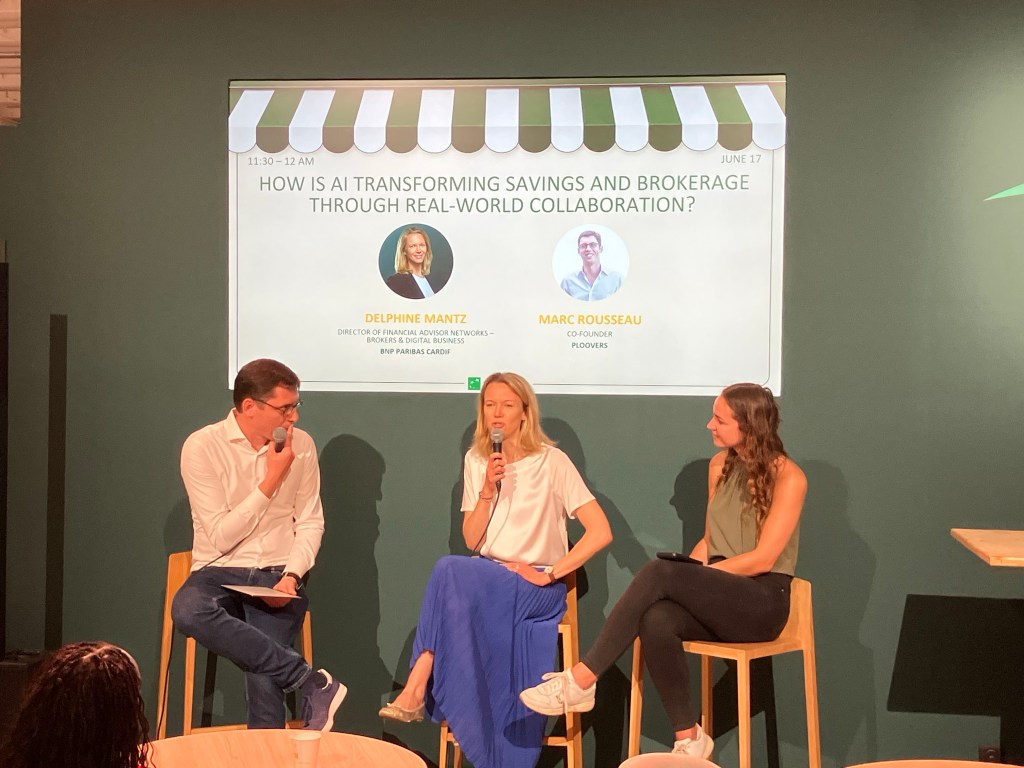
The 17th June : Delphine Mantz Director of Financial Advisors Networks – Brokers at BNP Paribas Cardif France and Marc Rousseau , co-founder of Ploovers shared a common vision: using artificial intelligence to enhance financial advice and makes it personalised, transparent and efficient.
One of the key takeaways from this talk: AI is not replacing humans, it is empowering them. Through automation and data analysis, advisors can save time, reduce errors and focus more on what truly matters: supporting clients and understanding their needs.
This partnership between BNP Paribas Cardif and Ploovers also highlights the importance of balancing:
⚡ the agility and innovation of a startup
🏛️ the robustness and expertise of a leading global insurer
🤝 a shared ambition to create greater value for clients
A fascinating discussion on practical, responsible and human-centered AI.
Concrete use cases throughout the customer journey

The 19th June : Michael de Toldi, Chief AI Officer at BNP Paribas Cardif, and Anthony Belpaire, Head of AI at BNP Paribas Fortis, shared concrete use cases illustrating how AI is creating value across the customer journey from KYC automation to AI-powered customer experiences.
AI is no longer just another technology feature; it is reshaping the way financial institutions operate, serve customers, fit partners needs and adapt to evolving expectations as Agentic AI is fundamentally transforming their communication and consumption patterns.
The innovation challenges of tomorrow’s insurance?
👟 The Cardif Lab’ organized several guided tours for different invited stakeholders (partners, ExCom and top management), each time offering them personalized journeys. Among these visits, one of the highlights was the one organized for collaborators’ teenagers so they could discover innovation in a fun and inspiring way.
This guided tours explored some of the most inspiring innovations shaping the future of tech, AI and customer experience. It was such an inspiring moment to connect with emerging trends already transforming insurance:
👉 generative AI
👉 agentic AI
👉 large-scale automation
👉 new digital uses redefining customer expectations and distribution models
🏆 Our Innovation Ambassadors were honored with an award in recognition of their commitment to promoting innovation at BNP Paribas Cardif, it makes it even more meaningful, as there is no better place to celebrate innovation and the people driving it forward.

Why has AI become a strategic lever for BNP Paribas Cardif?
At BNP Paribas Cardif, we are convinced that artificial intelligence is a major opportunity to accelerate our transformation, strengthen the value we bring to our partners and customers, and simplify the everyday work for our teams.
With nearly 100 AI use cases already in production, we have built strong foundations to scale further. As an insurer, our ambition is clear: to position BNP Paribas Cardif as a leading player in cutting-edge, responsible and secure AI solutions.
This transformation builds on a long-standing commitment to enhancing customer experience through technology while maintaining the highest standards to meet growing expectations.
Because the human dimension is the heart of the insurance profession, AI is seen as a powerful enabler not a replacement.

A successful and meaningful event ✨
VivaTech 2026 was the occasion for BNP Paribas Cardif to:
✅ strengthen its positioning as an actor committed to innovation
✅ develop its relationships with tech ecosystems, start-ups and partners
✅ illustrate concretely how technology can improve the customer experience
✅ inspire employees and younger generations by opening the doors to innovation
Sébastien Dessillons has been appointed head of development at BNP Paribas Cardif and joins BNP Paribas Cardif’s Executive Committee effective from 1 July 2026. As part of the transformation and development department, his mission will be to strengthen BNP Paribas Cardif’s position as a world leader in bancassurance partnerships by enhancing partner engagement, developing a value proposition that leverages the opportunities
offered by artificial intelligence and fostering innovative partnerships.

Sébastien Dessillons began his career in the public sector. He held several positions at the French Ministry of Economy and Finance, then in ministerial offices first with the Minister of Defense (2012-2014), and then with the Prime Minister (2014-2016), focusing on companies and industrial affairs.
He then joined the BNP Paribas Group in 2016, where he was responsible for the
coverage of a portfolio of major corporate clients. He later led the sector teams within the Group’s Corporate and Investment Banking division, first for Europe from 2019, then globally from 2023. In this role, he managed investment bankers specialized by economic sector and supported corporate and private equity clients in their strategic transactions, including M&A and related structured financing.
Sébastien Dessillons is a graduate of École Polytechnique (France) and is a Chief Engineer of the Corps des Mines (Paris).
BNP Paribas Cardif, the insurance company of the BNP Paribas Group, and the BCC Iccrea Group, the largest Italian cooperative banking group with 111 Credit Cooperative banks, today announced that BNP Paribas Cardif has acquired an additional 19% stake in the life insurance company BCC Vita increasing its total shareholding to 70%. The transaction falls within the framework of the agreements signed in 2023 and marks the natural evolution of a partnership that has already demonstrated solid foundations and strong results.
After BNP Paribas Cardif’s acquisition of 51% of BCC Vita, the two partners have jointly built an effective and distinctive bancassurance model, designed to meet customers’ evolving insurance needs. The additional
19% acquisition reflects a shared long-term vision and mutual trust that has been consolidated over time.
The BCC Iccrea Group network, strongly rooted throughout Italy, represents an effective distribution asset for BCC Vita, enabling it to deliver high quality insurance solutions to a broad and diversified customer base.
“This new milestone reaffirms our commitment to the BCC Iccrea Group and further strengthens BNP Paribas Cardif’s presence in the Italian life insurance market. Our partnership is built on a strong model that combines our ability to support the banking network with close collaboration between our teams and BCC Iccrea Group’s local network, helping us respond effectively to customers’ needs,” said Pauline Leclerc-Glorieux, Chief Executive Officer of BNP Paribas Cardif.
“This transaction is the concrete confirmation of the value of a strategic choice in which we deeply believe,” said Alessandro Deodato, Chief Executive Officer of BNP Paribas Cardif in Italy. “When we started the partnership in BCC Vita two years ago, we did it with a clear vision and with the intention of embarking on a stable and lasting path together. With this further acquisition, we reaffirm our long-term commitment to the BCC Iccrea Group, one of the pillars on which the growth of BNP Paribas Cardif in Italy is based”.
“We are particularly pleased with how we have launched our partnership with BNP Paribas Cardif, and today we are extending it to allow our 111 BCCs to continue offering their members and customers one of the most comprehensive and competitive ranges of products in the life insurance sector in Italy,” concluded Mauro Pastore, General Manager of the BCC Iccrea Group –.
“The development of this partnership, as set out in the agreements signed in 2023, demonstrates the soundness of the strategic plan we had devised in the interests of our BCCs, which will now have a longer timeframe to consolidate their relationships with their communities and establish themselves as a key point of reference in this sector too”.
Through this transaction, BNP Paribas Cardif reinforces its commitment to the Italian insurance market and bancassurance. It also confirms BCC Vita’s role as a strategic vehicle for business development in the life segment, thanks to the strength of the BCC Iccrea Group’s distribution network and to the daily collaboration to broaden the product offering, enhance the customer experience in an evolving market.
Building on its commitment to make insurance more accessible, especially for those affected by chronic or rare diseases, the insurer BNP Paribas Cardif is introducing new pricing for people with sickle cell anemia, the most common genetic disorder and the leading rare disease in France1. This advancement improves access to insurance in terms of coverage and pricing for creditor insurance contracts of BNP Paribas Cardif in France, both for clients of the BNP Paribas banking network and for brokers, wealth management advisors, and directly online via Cardif.fr
A significant step forward for the inclusion of people with sickle cell anemia
About 7.7 million people worldwide2 are affected by sickle cell anemia, a genetic disorder affecting red blood cells, representing a 40% increase in 25 years, including 30,000 people in France3. Those concerned often face difficulties accessing suitable credit protection insurance and are subject to premium surcharges on death and total and irreversible loss of autonomy guarantees, as well as significant exclusions on complementary guarantees, notably for work incapacity and disability.
Thanks to work carried out in collaboration with medical experts, BNP Paribas Cardif teams have developed a risk assessment that takes into account various therapeutic developments. This approach allows the insurer to improve pricing by more widely granting complementary guarantees and reducing surcharges. A new questionnaire is also introduced for insured people with sickle cell anemia to better understand the specifics of their condition.
When medicine advances, insurance evolves
Collaboration with the research community has enabled a better understanding of sickle cell anemia, its medical challenges, and its impact on patients’ quality of life. This initiative continues BNP Paribas Cardif’s actions for over 15 years to develop an inclusive offer, aiming to facilitate access to insurance solutions for people with rare or chronic diseases, such as inflammatory bowel diseases (IBD).
The insurer acts concretely to increase inclusion and access to creditor protection insurance. Among significant advances, BNP Paribas Cardif notably offers coverage without surcharge or exclusion to people treated for HIV, provided their viral load is undetectable at the time of subscription and to those who have overcome breast, prostate, or testicular cancer once the active therapeutic protocol is completed.
1Drépanocytose · Inserm, La science pour la santé
2 WHO issues first global guideline to improve pregnancy care for women with sickle cell disease [1] Épidémiologie de la drépanocytose en France et dans le monde | La Revue du Praticien
3 Épidémiologie de la drépanocytose en France et dans le monde | La Revue du Praticien